.png)
Extension Builders for Difficult Access Sites
What if the narrow lane or restricted side passage that makes your property unique didn't have to be the reason you're told "no" by every contractor you call? It's a common anxiety for homeowners; the fear that a lack of space will lead to spiralling manual labour costs or, worse, accidental damage to a cherished garden. You've likely found that many firms hesitate when faced with anything less than a wide-open site. We understand that feeling of uncertainty when you're caught between the home you want and the logistical reality of your plot. However, specialized extension builders for difficult access sites view these constraints not as barriers, but as puzzles waiting for a professional solution.
In this guide, you'll discover how expert logistical planning and specialized equipment turn even the most restricted sites into successful home extensions. We'll show you how a steady, disciplined approach to project management can mitigate risks and provide much-needed peace of mind. By examining the roles of micro-machinery and just-in-time material deliveries, we'll preview the exact methodology used to deliver high-end results where others see only obstacles.
Table of Contents
What Defines a Difficult Access Site for an Extension?
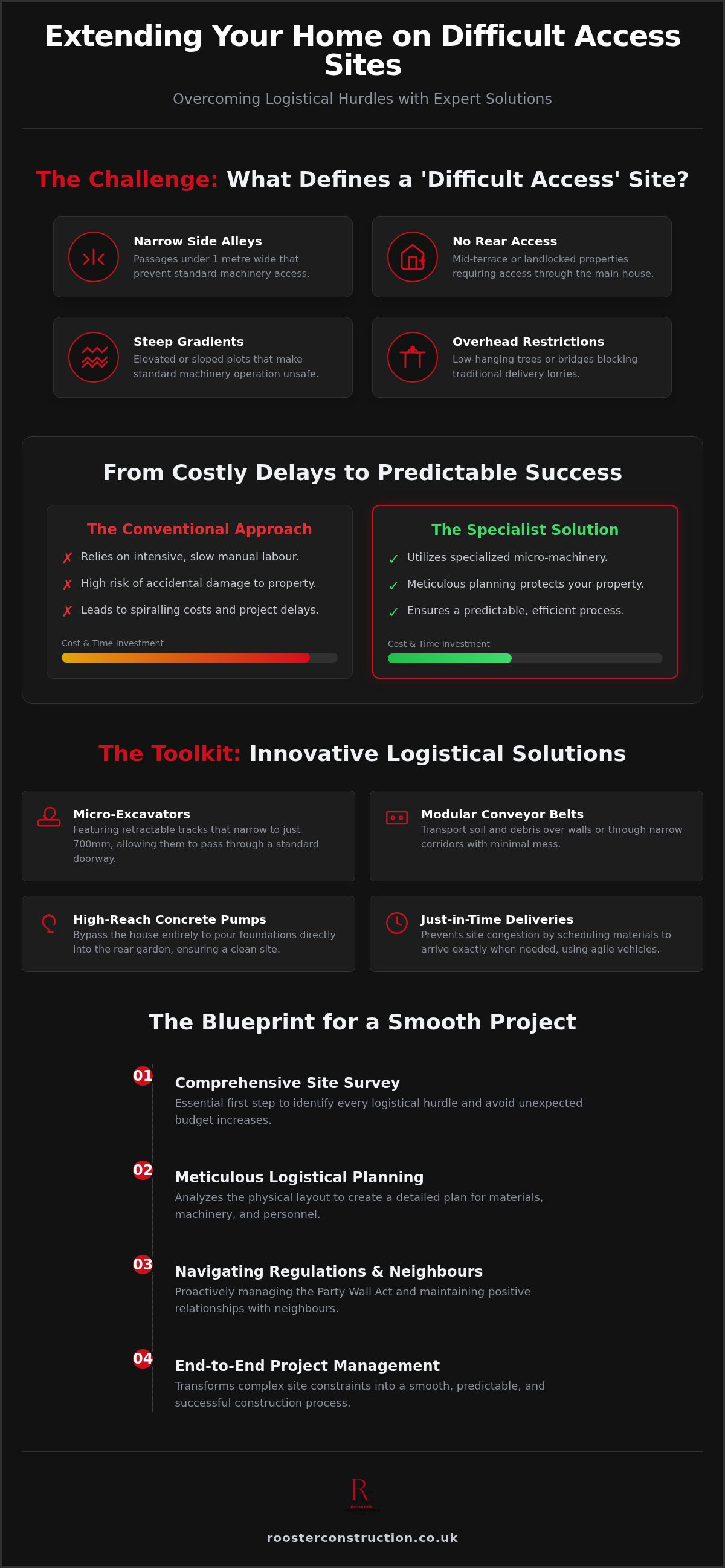
A site is rarely impossible to build on; it is usually just a matter of meticulous logistical planning. For many homeowners, the realization that they have a difficult access site comes when the first few contractors refuse to quote. These builders often see a narrow side alley measuring under 1 metre or a mid-terrace garden with no rear entry and decide the manual labour is too intensive. However, specialized extension builders for difficult access sites view these constraints as technical challenges that require specific equipment rather than reasons to walk away.
Professional firms begin the project by analyzing the physical layout through a detailed Site Planning Process. This assessment identifies hurdles like steep gradients that prevent standard machinery from operating safely. It also accounts for overhead restrictions that many overlook. Low-hanging trees or low bridges can block traditional delivery lorries, necessitating a shift to smaller, more agile vehicles or "just-in-time" material deliveries. When a site is landlocked, internal access requirements may even dictate that materials pass through the primary residence, a process that demands a high level of discipline and property protection.
Common Access Obstacles in Dorset Properties
In town centres like Bournemouth and Poole, Victorian properties often feature narrow side returns that are too slim for standard diggers. These tight spaces require a builder who understands how to operate within inches of a boundary. Further along the coast in Hampshire, elevated plots and cliff-side locations present significant vertical challenges where traditional gravity-fed drainage or foundation pours aren't feasible. Terraced housing remains a frequent hurdle; without a back lane, every bag of cement and every structural beam must be meticulously scheduled to bypass the main living areas. These constraints require a partner who values methodical execution and has the experience to protect your existing home throughout the build.
Innovative Logistical Solutions for Restricted Builds
Building an extension when access is restricted requires a shift from brute force to technical precision. While some contractors still rely on manual excavation, experienced extension builders for difficult access sites utilize a suite of specialized machinery designed for the modern residential plot. These tools allow for efficient progress without compromising the integrity of the existing structure or the safety of the workforce. By employing smart logistics, we ensure that even the most landlocked garden can be transformed into a functional living space.
Specialized Machinery for Tight Spaces
The micro-excavator is the cornerstone of restricted access work. These machines feature retractable tracks that can narrow to just 700mm, allowing them to pass through a standard 760mm doorway or a slim garden gate. Once in position, the tracks expand for stability during digging. For properties where even a micro-digger cannot reach the rear, modular conveyor belt systems can be installed. These systems transport soil and debris over walls or through narrow corridors with minimal mess. High-reach concrete pumps are also vital, capable of bypassing the house entirely to pour foundations directly into the rear garden, maintaining a clean and professional site environment.
Material Management and Storage
Space on a restricted site is a finite resource. Effective project management relies on just-in-time delivery schedules, ensuring that materials like timber or glazing units arrive exactly when they're needed. This prevents the site from becoming congested and hazardous. We often utilize 3.5T Luton curtain-sider vans or HIAB cranes for precise placement in tight spots. In cases where work might affect shared or public spaces, you may need to seek Planning Inspectorate consent to ensure all legal obligations are met before machinery arrives. This level of coordination ensures a smooth transition from the shell to the final joinery. If you're planning a complex project, our team provides comprehensive house extensions managed with this meticulous level of detail.
Planning and Neighbour Relations on Challenging Sites
Building on a constrained site is as much about diplomacy as it is about engineering. In densely populated residential areas like Christchurch and Ferndown, your project exists in close proximity to others, which can naturally cause anxiety for those living nearby. Professional extension builders for difficult access sites prioritize neighbour relations to prevent disputes that could halt progress. This involves proactive communication regarding noise and dust management, ensuring that the heavy lifting doesn't become a neighborhood grievance. By maintaining a disciplined and tidy site, we provide the reassurance that the project is being handled with professional ethics.
Legal frameworks provide the necessary structure for these complex interactions. The Party Wall etc. Act 1996 is a critical legal requirement, mandating that homeowners serve notice before work begins on or near shared boundaries. Adopting industry-standard logistical solutions for constrained sites helps minimize the physical impact on these shared walls. Meticulous planning ensures that excavation near existing foundations is handled with the surgical precision required to maintain structural integrity, protecting both your property and the one next door.
Scaffolding often presents a unique challenge in restricted areas where space is at a premium. If your project requires poles to be placed on a public footpath or if a crane arm needs to swing over a neighbour's garden, specific legal permissions are mandatory. These "oversail" licences are essential for maintaining compliance and avoiding costly legal delays. Our approach focuses on finding strategic scaffolding solutions that provide safe working platforms without infringing on neighbouring air space or blocking pedestrian access.
Legal and Regulatory Considerations
Traffic management is another vital component, particularly when navigating the narrow residential streets common across Dorset. Scheduling deliveries to avoid school runs or peak traffic times shows a level of consideration that residents appreciate. Securing a house extensions Dorset project requires specific insurance for restricted sites because the proximity of neighbouring structures increases the potential for accidental damage during complex structural works. We manage these intricate details to ensure your project remains compliant and stress-free from the initial notice to the final brick.
Our team is dedicated to guiding you through these logistical and legal puzzles with quiet confidence. If you are ready to discuss your project with an experienced professional building team, we are here to provide the steady hand you need to turn your vision into a reality.
Choosing Specialist Extension Builders for Your Project
Selecting a partner for a restricted build requires more than just comparing bottom-line figures. It's a choice based on trust and technical capability. A generic quote provided without a physical inspection often leads to mid-project budget shocks. True extension builders for difficult access sites insist on a site-specific logistical survey. This visit allows the team to map out the exact path for micro-machinery and identify exactly where deliveries will be staged to avoid blocking public access.
Experience in standard builds doesn't always translate to the unique pressures of a landlocked site. When vetting potential contractors, examine their history of home renovation projects that share your specific constraints. Seeing how a firm handled a similar Victorian mid-terrace or a steep coastal plot provides the evidence of competence you need. It's about finding a team that has already solved the problems you're currently facing, ensuring they won't be learning on your time.
At Rooster Construction, we've spent 15 years refining our approach to Bournemouth's most challenging domestic sites. We provide a dedicated project manager to serve as your steady hand throughout the build. This ensures that communication remains clear and that every logistical hurdle is cleared before it impacts the timeline. We take immense pride in our disciplined methodology, offering an end-to-end service that removes the burden from the homeowner and delivers a result rooted in quality craftsmanship.
Questions to Ask Your Potential Builder
Before committing to a contract, it's vital to understand the practicalities of the builder's plan. Use these specific questions to gauge their level of preparation for your unique site:
How will you handle waste removal if a skip cannot be placed on the drive? Look for solutions like "wait-and-load" services or the use of smaller, more frequent waste collections that don't rely on large containers.
What specialized equipment do you have access to for narrow entry points? A prepared builder will mention micro-diggers with retractable tracks, tracked dumpers, or even modular conveyor systems for soil removal.
Can you provide references for previous difficult access builds in the local area? Local experience in Dorset and Hampshire is invaluable for understanding regional planning quirks and managing the narrow streets common in our town centres.
Transforming Your Property's Potential
Difficult access shouldn't be the reason you compromise on your home's potential. The right combination of micro-machinery, precise logistical scheduling, and proactive neighbour relations turns even the most restricted plot into a viable construction site. It's about replacing uncertainty with a disciplined plan that prioritizes the safety of your existing structure and the peace of mind of those living nearby. Every project is a unique solution that requires a professional touch to ensure quality results.
Finding the right extension builders for difficult access sites is the first step toward a successful build. At Rooster Construction, we bring over 15 years of local experience in Dorset and Hampshire to every project. We are specialists in complex residential logistics, providing comprehensive project management from the initial shell to the final joinery. Our team acts as the steady hand you need to navigate the technical and legal requirements of a constrained site without the stress of mismanagement.
If you're ready to move forward with confidence, Book a Logistical Site Survey with Rooster Construction today. We look forward to showing you how a methodical approach can bring your vision to life safely and efficiently.
Frequently Asked Questions
Will difficult access significantly increase the cost of my extension?
Difficult access typically influences the final investment due to the specialized equipment and increased labor hours required. While modern machinery like micro-diggers reduces the need for manual digging, the logistical complexity often necessitates more frequent, smaller material deliveries. Professional extension builders for difficult access sites will provide a detailed breakdown of these logistical requirements during the site survey, ensuring there are no surprises as the project progresses.
Can you build an extension if there is no rear access to the garden?
You can absolutely build an extension even if your garden is completely landlocked. We utilize innovative solutions such as high-reach concrete pumps that can span over the roof of your property to reach the foundations. For structural steel and heavy glazing, we often coordinate crane-assisted deliveries. These methods ensure that the lack of a rear entrance doesn't prevent you from expanding your living space or improving your property's value.
How do builders get a digger into a garden with only a narrow side gate?
We use specialized micro-excavators specifically designed for residential sites with restricted entry points. These machines feature retractable tracks that can narrow to just 700mm, allowing them to pass through a standard garden gate or even a house doorway. Once the machine reaches the work area, the tracks expand back to full width to provide the stability needed for safe and efficient excavation without damaging the surrounding structures.
What happens to the waste and soil if a skip can't reach the back of the house?
Managing waste is a core competency of extension builders for difficult access sites. If a skip cannot be placed near the excavation site, we implement a wait-and-load service or use smaller, more agile waste removal vehicles. In some cases, we install modular conveyor belt systems to transport soil and debris to a collection point. This disciplined approach keeps the site tidy and prevents waste from accumulating in your garden.
How do you protect my existing floors if materials must be carried through the house?
Protecting your home is our priority when internal access is the only option. We use heavy-duty, slip-resistant floor protection and temporary dust screens to seal off the work route from the rest of your living areas. Our team follows a strict protocol for material handling, ensuring that every item is moved with care to prevent impact damage. This meticulous attention to detail ensures your existing property remains in pristine condition throughout the build.


Comments