.png)
Extension Payment Schedule: A Homeowner’s Guide to Fair Stage Payments
The most critical blueprint for your new living space isn't the one showing the walls and windows; it's the one detailing exactly when your money leaves your bank account. For many homeowners in Bournemouth and across Dorset, the greatest source of stress isn't the dust or the noise, but the uncertainty of the extension payment schedule. It's natural to feel a sense of trepidation when asked for significant sums upfront, especially when the fear of a project stalling or a contractor disappearing looms large in the back of your mind.
We believe that a professional relationship must be built on transparency and ethical conduct. You deserve a process where your investment is protected and every payment corresponds to a visible, verified stage of construction. This guide will teach you how to structure a secure building contract that replaces anxiety with a sense of total control. We will explore how to define clear milestones, use objective inspections to trigger payments, and maintain a healthy, productive partnership with your builder from the initial groundworks to the final, high quality carpentry finishes.
Table of Contents
What is an Extension Payment Schedule and Why is it Essential?
An extension payment schedule is a legally binding document that creates a clear financial roadmap for your project. It specifies exactly when funds will be released and the specific construction milestones that must be achieved to trigger those payments. By establishing these terms early, you create a professional framework that eliminates any ambiguity regarding what constitutes "satisfactory completion" at every stage of the build.
A well-structured schedule balances the builder’s operational need for consistent cash flow with your own requirement for financial security. It ensures that you aren't overpaying for work that hasn't happened yet, while providing the contractor with the resources needed to keep the project moving forward. This document should always be agreed upon and signed before any ground is broken on your Dorset home.
To better understand how financial schedules function within a broader regulatory and payment context, watch this helpful overview:
The Risk of Large Upfront Deposits
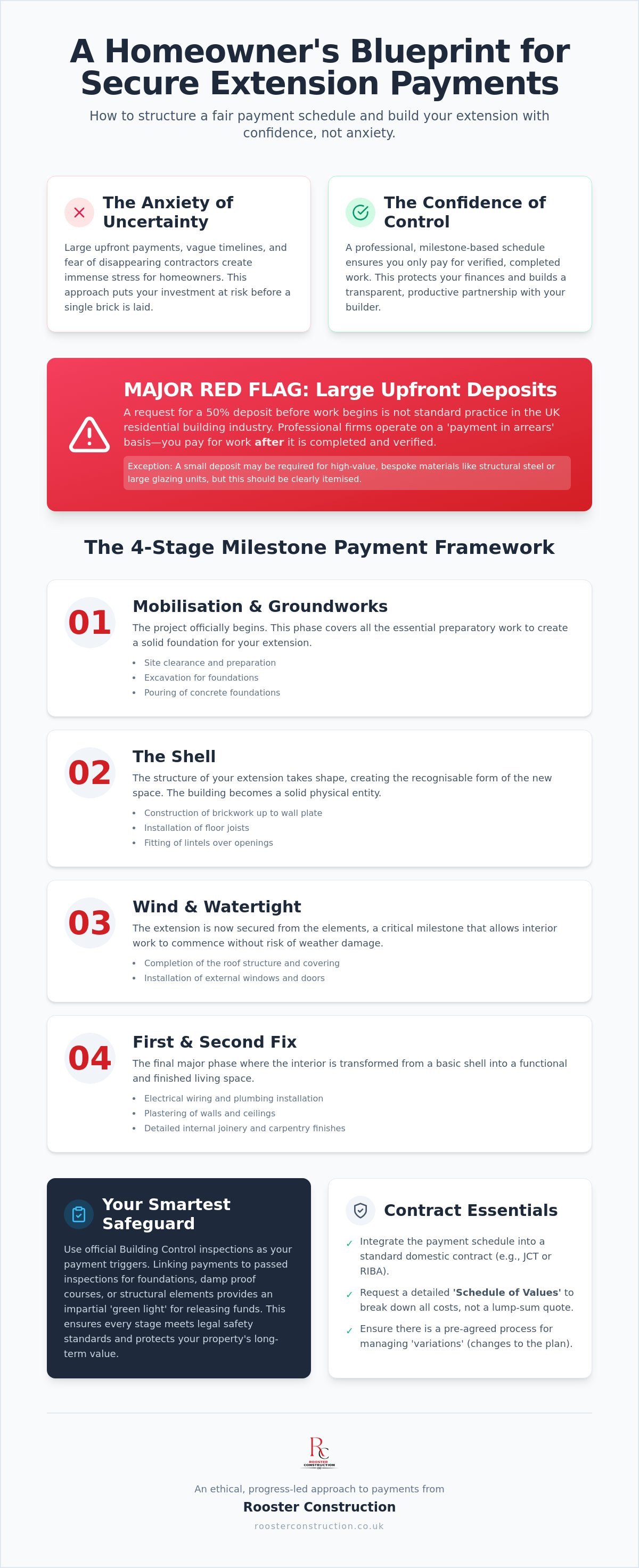
In the UK residential building industry, a request for a 50% deposit is a significant red flag. Professional firms typically operate on a "payment in arrears" basis, which is the industry standard for home extensions. This means you pay for work after it has been completed and inspected. There are rare exceptions for bespoke, high-value materials, such as specialized structural steel or large glazing units, where a supplier may require a deposit to secure the order. Outside of these specific items, your extension payment schedule should reflect progress rather than promises.
The Role of the Building Contract
A robust payment schedule works best when integrated into a standard domestic contract, such as those provided by the JCT or RIBA. These contracts often reference a Schedule of Values, which provides a detailed breakdown of costs for each part of the work. This integration ensures there is a clear, pre-agreed process for "variations," which are those inevitable adjustments or unexpected works that can arise mid-build. Having this process in writing keeps the project on track and maintains a professional relationship between you and your contractor.
A Milestone-Based Framework: Typical Stages for a House Extension
A logical structure is the backbone of any successful build. By breaking the project into distinct phases, you ensure every pound spent is accounted for. This is where your extension payment schedule becomes a practical tool rather than just a list of dates. A professional framework typically follows these four key milestones:
Stage 1: Mobilisation and Groundworks. This phase involves clearing the site, excavation, and pouring the foundations.
Stage 2: The Shell. This includes construction of the brickwork up to the wall plate, alongside the installation of floor joists and lintels.
Stage 3: Wind and Watertight. The roof structure and covering are completed, and external windows and doors are fitted to secure the building from the elements.
Stage 4: First and Second Fix. This final major phase covers electrics, plumbing, plastering, and the detailed internal joinery.
Using Building Control as Your Payment Trigger
Objective verification is the most effective way to maintain trust throughout a project. Instead of relying on subjective opinions, use official site visits from BCP Council or a private inspector as your payment triggers. Linking payments to passed inspections for foundation trenches, damp proof courses, or structural completion provides an impartial "green light" for the release of funds. Building Control sign-offs protect the long-term value of your Dorset property by ensuring every structural element meets safety standards. This approach is a hallmark of industry-standard payment contracts, providing peace of mind for both the homeowner and the contractor.
Managing Material Costs and Trade Accounts
There is a fundamental difference between paying for labour and paying for materials. Established builders typically use trade credit accounts to manage their cash flow effectively. This allows them to order essential supplies like timber or bricks without requiring immediate cash from the homeowner. It's a sign of a healthy, professional business when a contractor can start work without asking for material money on day one. If you're planning a project and want a partner who values this level of financial clarity, the experts at Rooster Construction can help you structure a fair, progress-led plan.
Negotiation Strategies and Red Flags for Bournemouth Homeowners
Negotiating a fair extension payment schedule requires a shift from viewing the builder as a vendor to seeing them as a partner. You should always insist on a granular breakdown of costs rather than accepting a single, opaque lump-sum quote. This transparency is vital when managing the logistical complexities of Bournemouth house extensions, where restricted site access or specific BCP Council planning conditions can influence the pace of work. A professional will provide a document that details labour, plant hire, and material allocations for every phase.
Be wary of contractors who request cash payments or significant funds for "unspecified materials" early in the project. These are classic red flags that often signal cash flow instability. Your financial plan should also incorporate a 10% contingency fund. This isn't for the builder to spend freely; it's a dedicated reserve to handle genuine unforeseen structural issues that may only become apparent once the ground is opened or walls are stripped.
The Importance of the Retention Payment
A retention is a percentage of the contract value, typically between 2.5% and 5%, that you hold back after the main work is finished. You should only release this final amount once the "snagging list" is fully cleared and any minor defects are rectified. We recommend establishing a formal "defects liability period" of six months. This timeframe provides peace of mind, ensuring the builder remains responsible for the integrity of the work as the new structure settles through the changing seasons.
Verifying Work Before Releasing Funds
Never release a stage payment until you have physically inspected the work against the agreed specification. Take regular photographs of the progress; these serve as a vital record and help clarify any discussions regarding completed milestones. If you want to ensure your project is managed with this level of ethical rigour, contact our professional building team today to discuss your plans.
Why Rooster Construction Favours Transparent, Ethical Payment Cycles
Rooster Construction operates on a foundation of professional ethics. We believe that every home renovation should be a partnership defined by honesty and clarity. This commitment isn't merely a marketing claim; it's a practice we've refined over 15 years of serving the Dorset community. Our approach ensures that your extension payment schedule is never a source of anxiety. We structure every contract so that you only release funds for tangible, completed progress that has been verified on-site.
Our reputation as a steady, reliable partner in Bournemouth and Poole comes from this disciplined methodology. We take immense pride in the final details, particularly our specialized carpentry and joinery finishes. These elements often represent the final sign-off on a project. We ensure they meet our rigorous standards before the final retention is even discussed, maintaining our focus on quality until the very last day.
End-to-End Project Management in Dorset
Managing a build involves coordinating various trades, from groundworkers to electricians. Our comprehensive service handles every detail, significantly reducing the stress typically associated with residential construction. By maintaining a single point of contact, we link our traditional craftsmanship values directly to the integrity of our financial processes. You won't find yourself caught between conflicting contractors or managing hidden "extras" that weren't part of the original vision.
Start Your Extension Journey with Confidence
The first step toward a successful home improvement is an accurate, professional quote. During our pre-construction phase, we walk you through the proposed payment schedule in detail. We explain every milestone and inspection trigger, ensuring you feel in total control before the first brick is laid. This level of preparation is how we build trust and ensure a hassle-free experience from start to finish.
Ready to discuss your project? Contact Rooster Construction today to begin planning your extension with a team that values your peace of mind as much as the structural integrity of your home.
Secure Your Investment with a Professional Building Partner
A successful house extension relies as much on financial clarity as it does on structural integrity. By implementing a milestone-based framework and using objective triggers like Building Control inspections, you ensure that every payment is a reflection of tangible progress. This approach eliminates the ambiguity that often leads to project stress; it allows you to focus on the transformation of your home rather than the management of your budget.
At Rooster Construction, we bring 15 years of local building expertise to every project in the Dorset area. We specialize in high-end residential finishes and prioritize milestone-based contracts because we know it's the best way to ensure your financial security. Structuring a fair extension payment schedule is a core part of our commitment to professional ethics and transparency. We believe your journey to a new living space should be as steady and predictable as the craftsmanship we deliver.
Get a Professional Quote for Your Dorset Extension and take the first step toward a stress-free build today. We look forward to helping you realize your home's full potential with the care and precision it deserves.
Frequently Asked Questions
How much should I pay as a deposit for my extension?
You should typically pay no more than 10% as a deposit, and many professional firms require nothing until the first milestone is reached. A request for a large upfront sum, such as 50%, is a major red flag in the UK building trade. The only reasonable exception is for high-value, bespoke items like structural steel or specialist glazing where a supplier requires payment to secure the order.
What happens if my builder asks for more money halfway through the stage?
If a contractor requests additional funds mid-stage, you should refer directly to your signed extension payment schedule. Payments should only be released when the agreed milestone is fully completed and verified by you or an inspector. If the request stems from unforeseen work, it must be handled through a formal variation order that documents the change in scope before any money changes hands.
Can I pay for materials directly to the supplier instead of the builder?
You can pay suppliers directly, but it's generally discouraged because it complicates the chain of responsibility. If you purchase the materials, you become responsible for their delivery, storage, and any breakages on site. It's often better to let your contractor manage this through their professional trade accounts, ensuring they remain accountable for the quality and fitment of every component used in the build.
What is a retention payment and when should I release it?
A retention payment is a sum, usually between 2.5% and 5% of the total contract value, held back to ensure all minor defects are corrected. You should release the first half upon practical completion of the project. The final half should only be released once the snagging list is cleared and the defects liability period, which typically lasts six months, has passed without further issues.
Should I pay my builder weekly or by completed milestone?
Paying by completed milestone is the safest and most professional method for a home extension. Weekly payments can lead to a situation where you've paid for more time than actual progress made on site. A milestone-based extension payment schedule ensures that your financial output always matches the physical value added to your property, maintaining a fair and ethical balance for both parties.


Comments